Om te voorkomen dat uw vraag te laat wordt beantwoord, verzoeken wij u om uw WhatsApp/Skype-bericht mee te sturen met het bericht. Zo kunnen wij direct contact met u opnemen.
We will reply you within 24 hours. If for urgent case, please add WhatsApp/WeChat: +8613791936882 ,. Or call +86-18678911083 directly.
Overgrown banks, rough terrein, and wet ditches make mowing slow and risky. You lose hours—and sometimes traction. A tank-style, track-driven grasmaaier puts you in afstandsbediening, cuts faster on slopes, and keeps people safe away from blades.
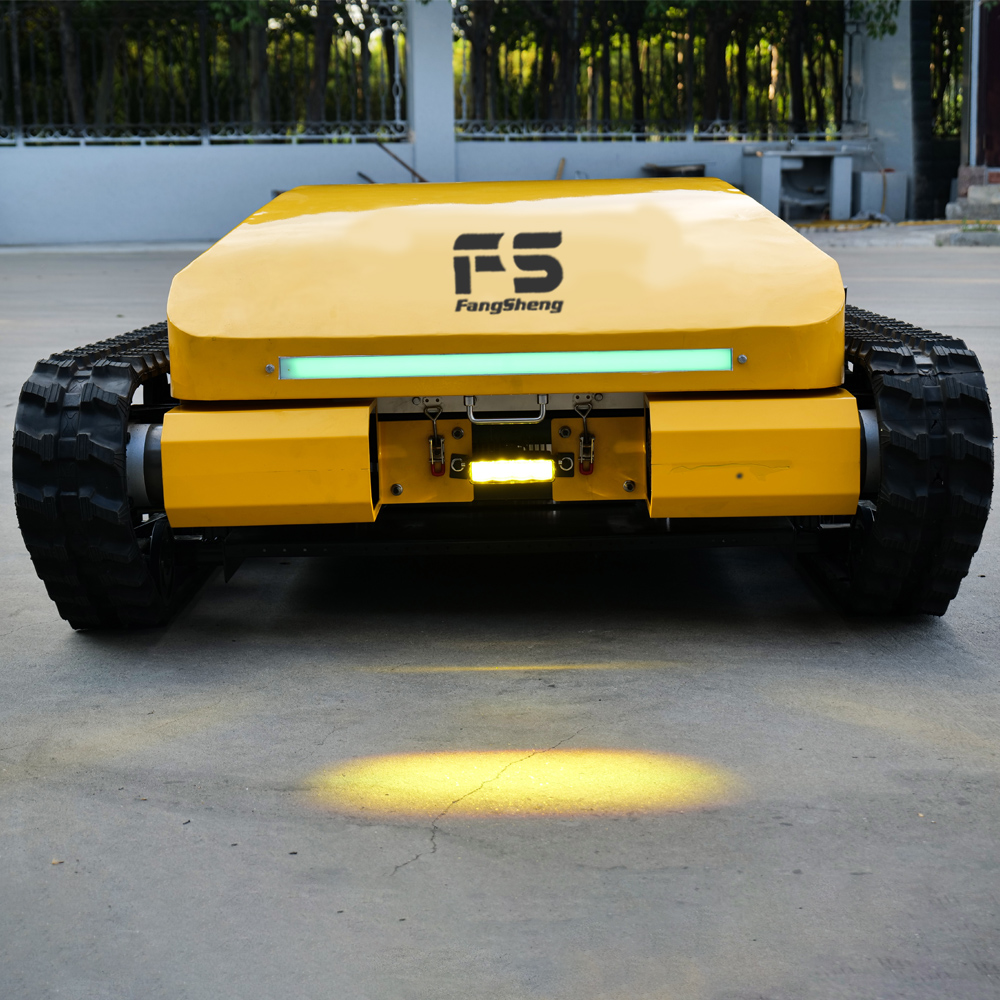
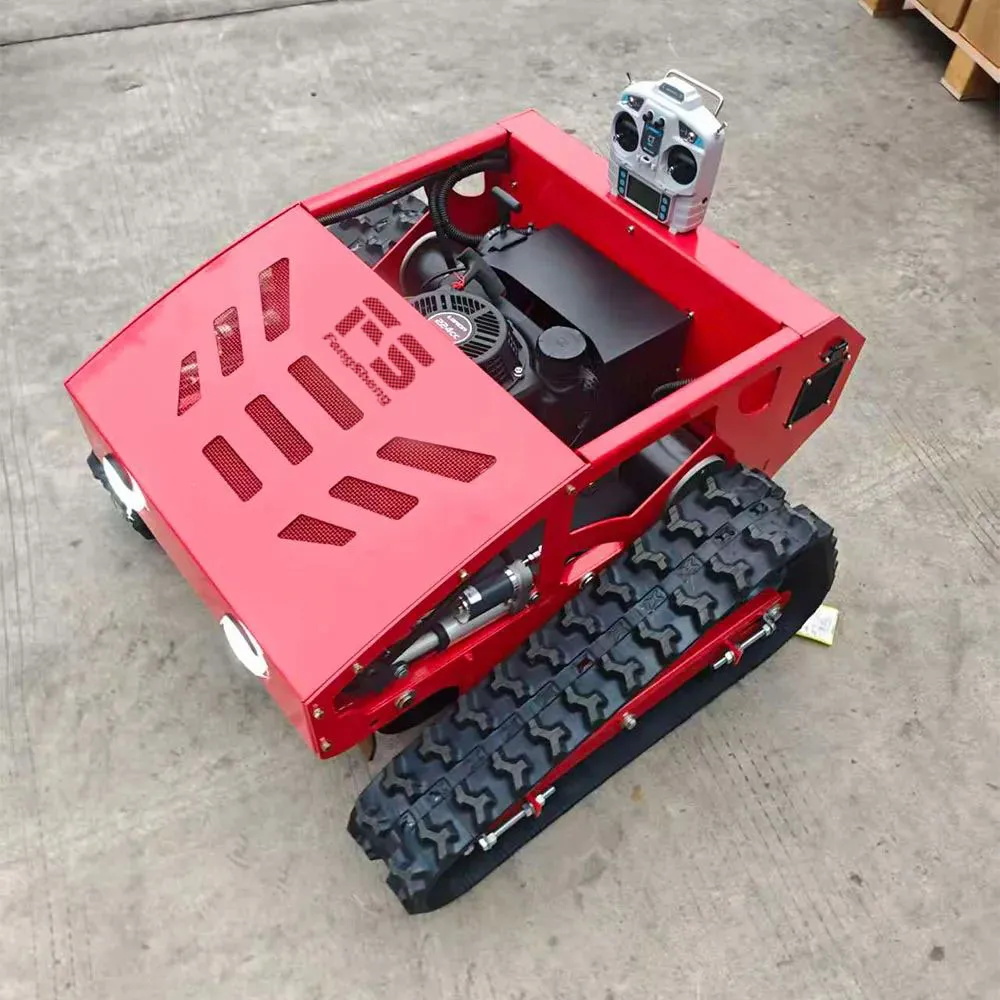
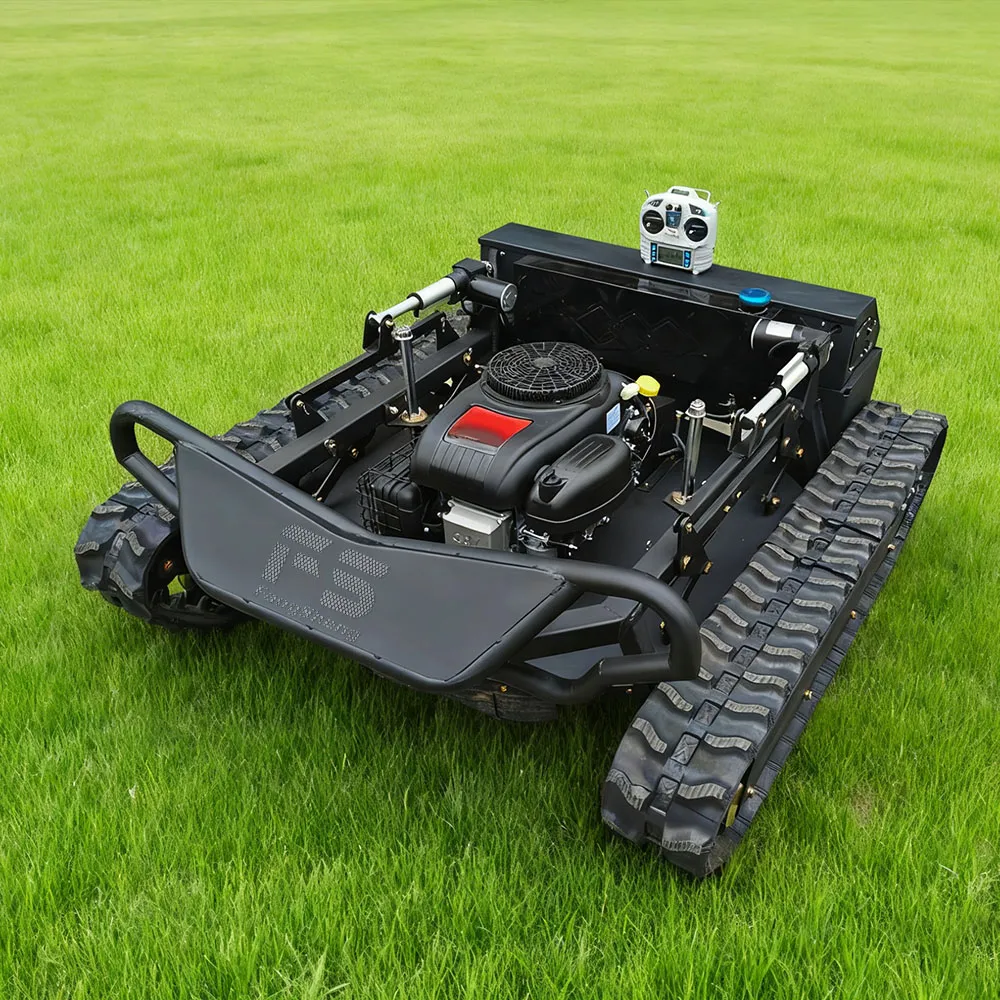
A tank lawn mower is a afstandsbediening or robotic cutter that uses tank tracks instead of wheels. The tracked undercarriage spreads weight for stability on steep or soft ground, while a powerful deck and engine (or battery) finish tough grass and brush. It lets you mow from a distance and is ideal for banks, ditches, embankments, and areas unsafe for walk-behind or ride-on units.
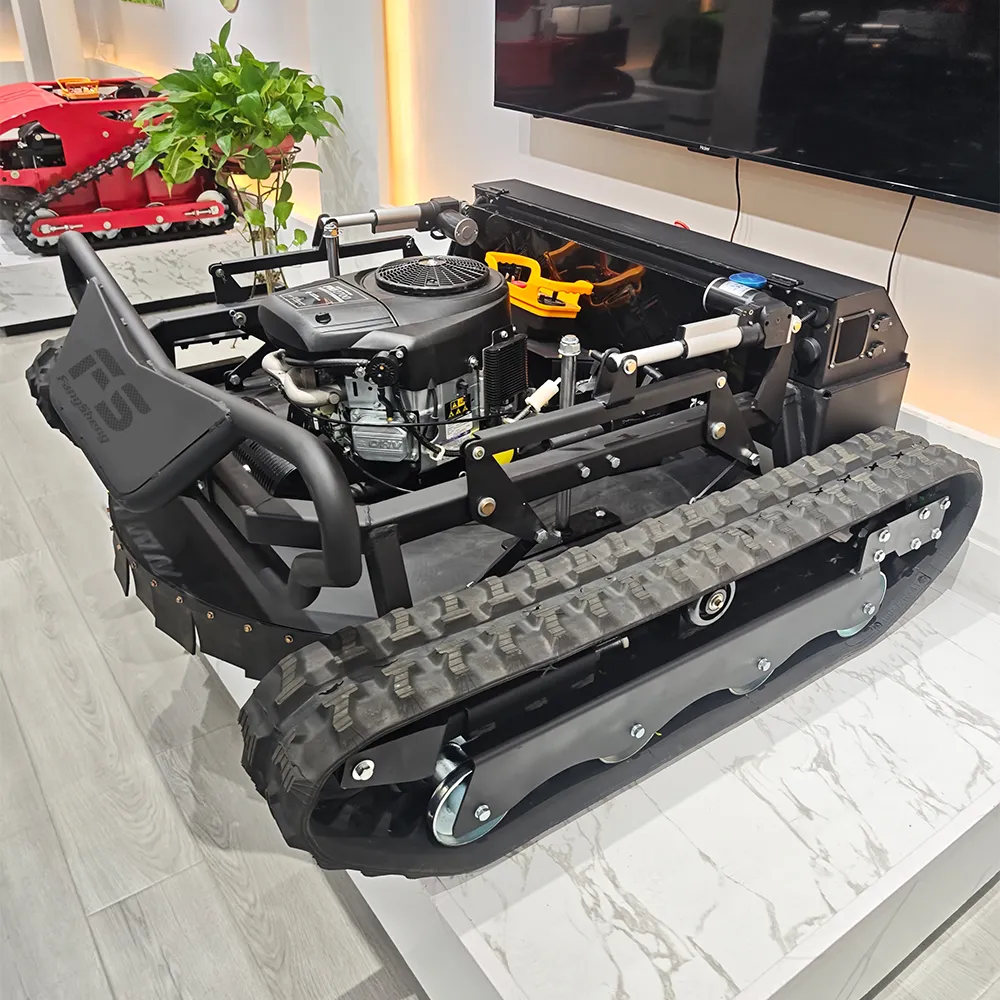
Steep sidehills, stormwater channels, and culverts are where wheel mowers slide or scalp. Tracks act like continuous “snowshoes,” lowering ground pressure so you can mow the lawn on clay and wet sod with less rutting. For contractors and facility managers, this shift—from pushing machines into risky places to steering a control lawn mower remotely—reduces near-miss events and increases hours-per-day productivity. That’s why “lawnmower into a working tracked cutter,” “lawnmower conversion,” and “turn my riding lawn mower into a track unit” keep trending across the world on YouTube. The right tank platform is not just a stunt; it’s an efficient, repeatable way to finish slopes and brush while operators stand clear.
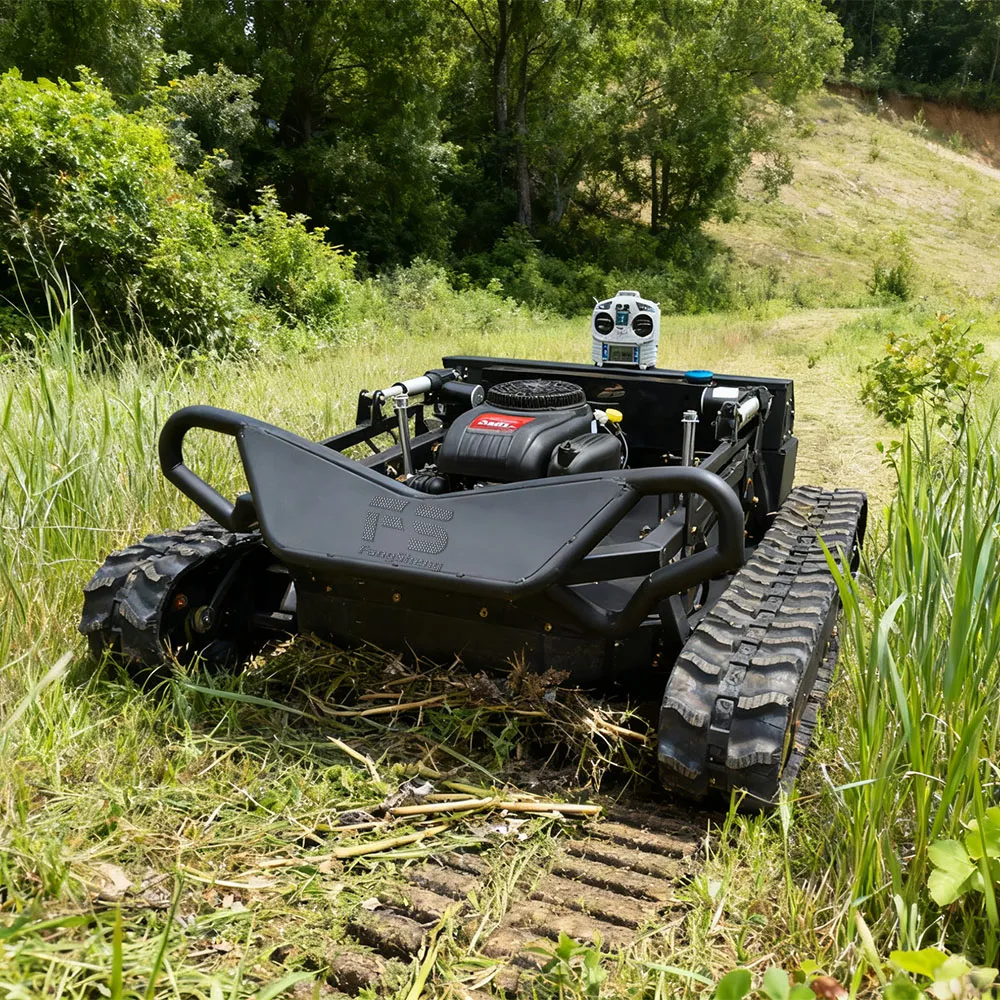
A tracked maaier spreads load over a longer contact patch; that improves grip on terrain where wheels spin and tear turf. On slopes, the low center of gravity, wide stance, and tank tracks deliver “stay-planted” stability so the deck holds height and angle. In soft soils, tracks float rather than sink, keeping cut paths smooth and predictable. Wheels still win for speed on flat sports turf, but for banks, berms, and ditch lines, tracks tackle inconsistent footing with fewer slips.
Three quick case studies
Municipal green bank – Wet clay berm beside a roadway. Wheels carved ruts; crews walked too close to traffic. Switched to tank tracks and remote steering. Result: stable passes, fewer lane closures, better edge line.
Logistics park ditch – Stormwater channel with cattails. A tracked mower with brush deck cleared reed beds; a robot grasmaaier now maintains the flats. Outcome: predictable cycles and a safer routine.
Farm levee – Steep sides with rodent holes. Tracks bridged voids where tires sank. Operator stayed upslope with the handset. Finish improved, and the time-to-cut dropped by a third.


 Dutch
Dutch  English
  German
  French
  Spanish
  Danish
  Norwegian
  Hungarian
  Turkish