Sorularınızın gecikmeli yanıtlanmasını önlemek için lütfen mesajınıza WhatsApp/Skype adresinizi de ekleyin, böylece sizinle ilk anda iletişime geçebiliriz.
We will reply you within 24 hours. If for urgent case, please add WhatsApp/WeChat: +8613791936882 ,. Or call +86-18678911083 directly.
When crews still move spoil, gravel, and debris with wheelbarrows or oversized machines, projects slow down, labor risk rises, and access becomes a daily headache. The fix is simple: use a compact tracked dump truck that keeps moving where bigger or wheeled units struggle.
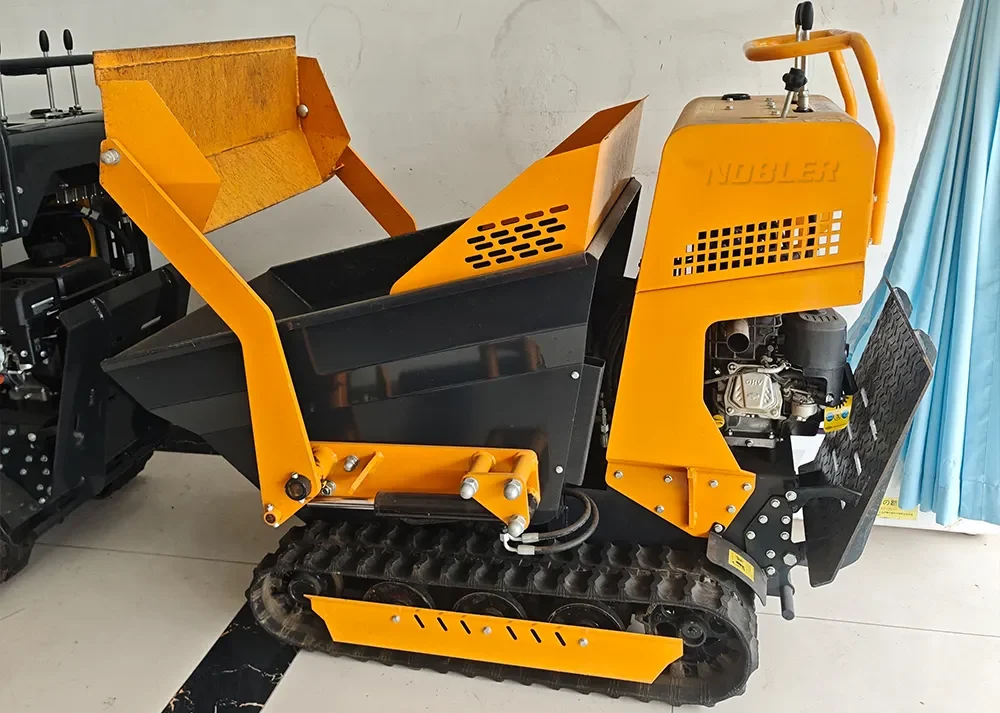
A modern mini dump truck with a mini track chassis is built for soft ground, tight access, and short-cycle hauling. The best models combine stable tracks, a hydraulic tipper, practical payload capacity, and factory support, making them a smart choice for construction, farm, and landscape users who need high output without the size of full articulated dump trucks.
An intelligent dump truck in this compact class is not about flashy gadgets. It is about smart jobsite performance. A mini dump truck uses a low-profile chassis, crawler undercarriage, and powered tipping body to move material smoothly in places where access is limited. CNFS Group describes its tracked dump truck as a compact machine for construction and agricultural work, with hydraulic tipping, crawler traction, and a tight turning radius for narrow paths.
In practical terms, this kind of dumper truck helps crews move spoil, sand, debris, and bulk materials with less manual handling. HSE says employers should avoid hazardous manual handling where possible and should consider automating or mechanising the process. That is exactly where a compact dumper adds value: it turns repeated lifting and pushing into controlled, powered material movement.
From a B2B buying perspective, the machine is attractive because it is small enough for confined work but strong enough to support real daily production. It is a truck small in size, but it functions as a serious transporter when labor efficiency and dependable output matter. That is why it continues to gain interest on modern jobsites and in equipment dealer channels.
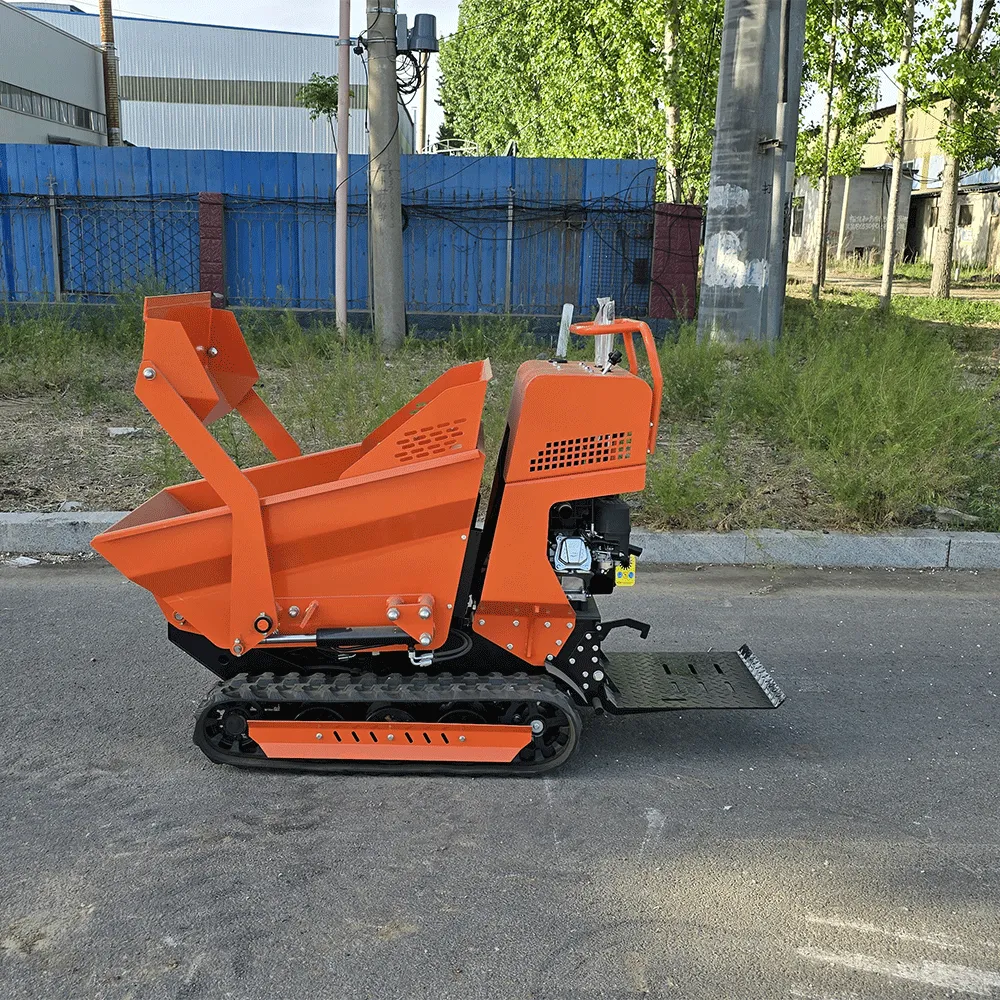
The biggest reason is footprint. A tracked dumper spreads machine weight across a larger contact area, which lowers ground pressure and improves grip. CNFS Group’s mini crawler product page lists a 700 mm chassis width, 180 mm rubber tracks, and 1000 mm grounding length, all of which help the unit stay stable on mud, loose fill, and rough routes.
That matters on any construction site with wet ground, trench spoil, or short haul paths cut between other machines. A wheel-based cart may spin or rut the surface. A crawler design provides better stability and more sure-footed movement. On difficult terrain, that translates into higher uptime, cleaner dumping, and less time spent recovering stuck equipment.
For users working off-road, on slopes, or in soft terrain, this is the difference between a machine that helps and a machine that delays the crew. The best tracked dump truck does not just move material. Its design provides maximum ground contact, the best grip, and dependable maneuverability when the route is messy, wet, or uneven.
A powered tip system changes the whole work cycle. CNFS Group’s current mini crawler model uses a hydraulic tipper with a 100° tipping angle and 46# anti-wear hydraulic oil, which makes unloading faster and more controlled than manual dumping. For short repetitive cycles, that saves time on every trip.
This matters because loading and unloading is where many small-job delays happen. Operators lose time clearing half-dumped material, pushing wet spoil by hand, or trying to empty loads cleanly into a pile or skip. A good hydraulic track dumper helps the load release smoothly and gives the operator better consistency from trip to trip. CNFS also highlights this as a key benefit for high efficiency in complex terrain.
OSHA notes that ergonomics helps lessen muscle fatigue, increases productivity, and reduces the number and severity of work-related musculoskeletal disorders. In plain language, fewer awkward manual unloads mean better safety and better flow. For a buyer comparing machines, the tipper is not a small feature. It is a direct productivity tool.
Payload is where many buyers start, but it should not be the only filter. CNFS Group’s featured compact model is rated at 500kg, while its buyer guide notes that mini dumper options in the market often range from 300kg up to 1ton mini classes. That tells buyers something important: payload must match route, material density, and unloading frequency, not just headline capacity.
A 500kg machine is often enough for landscaping, snow removal, farm transport, and general site cleanup. If you are handling wet aggregate, dense spoil, or heavier demolition debris, you may start comparing 800kg or 1 ton machines. But the truth is simple: if a larger dumper loses agility or cannot turn cleanly, the extra payload capacity may not improve actual daily output.
The right way to size a machine is to look at load capacities, route width, dumping height, and cycle count. A well-matched compact unit often outperforms a bigger unit on tight jobs because it keeps moving. The best buyer asks: how much can I move per hour on my real job site? That question is more useful than comparing numbers alone.
This is a common question, especially for buyers comparing compact machines with larger articulated dump trucks. The answer is straightforward. If you are handling mass excavation, long haul routes, or broad-site movement in mining operations, full-size articulated units make sense. But if your priority is tight access, soft ground, and short-cycle movement near buildings or trench lines, a mini tracked dumper is usually the better fit.
A compact dumper does not replace large-site haul trucks. It fills a different role. It is there for narrow gates, side yards, steep entries, and places where a full-frame dumper simply does not belong. That is why many contractors think carefully before renting an articulated dump truck for a small access job. The larger machine may offer more payload, but it may not deliver more useful production.
So when you compare articulated dump trucks with a mini crawler dumper, the real decision is about fit, not prestige. The compact unit offers better maneuverability, lower site impact, and easier placement around people, structures, and finished surfaces. On small and mid-scale jobs, that can be the more intelligent choice.
A professional buyer should ask more than price. Start with machine dimensions, payload, turning radius, tipping method, spare parts support, and export readiness. CNFS Group positions itself as a factory manufacturer with more than 10 years of experience, over 10,000 square meters of factory area, annual output of more than 200,000 sets across its vehicle lines, and one-stop before-sales and after-sales support.
Then ask about production process and delivery clarity. CNFS lists professional design support, strict quality control, free plan quote support, fast production, acceptance delivery, and 24-hour after-sales response. For distributors and project buyers, these are not soft promises. They affect scheduling, replacement parts, ramp-up risk, and whether a machine can stay productive after delivery.
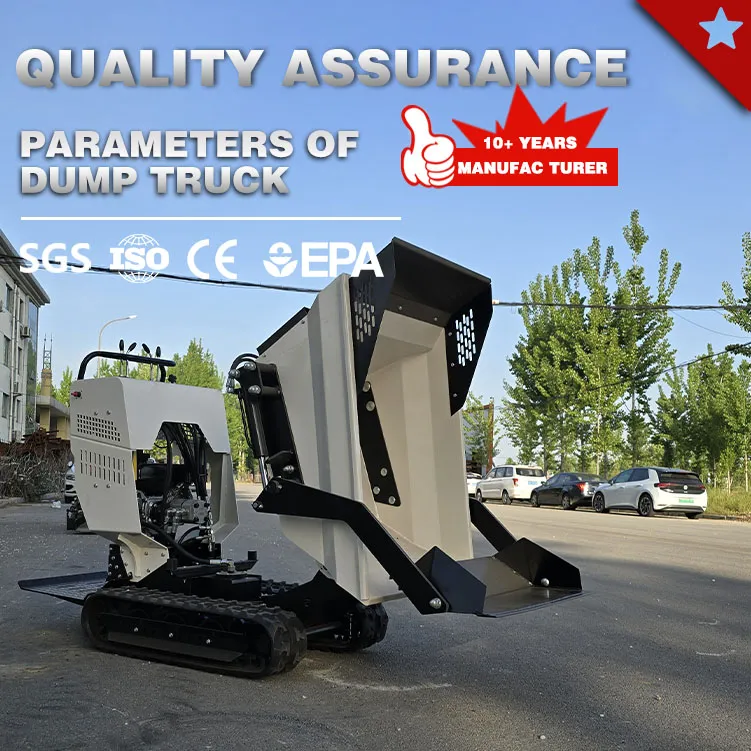
If your market requires ce paperwork or other export compliance checks such as ce epa-style documentation, confirm it before ordering. Also review manuals, packing, and service channels. A dump truck for construction is only as useful as the support behind it. The machine, the documentation, and the supplier response all matter.
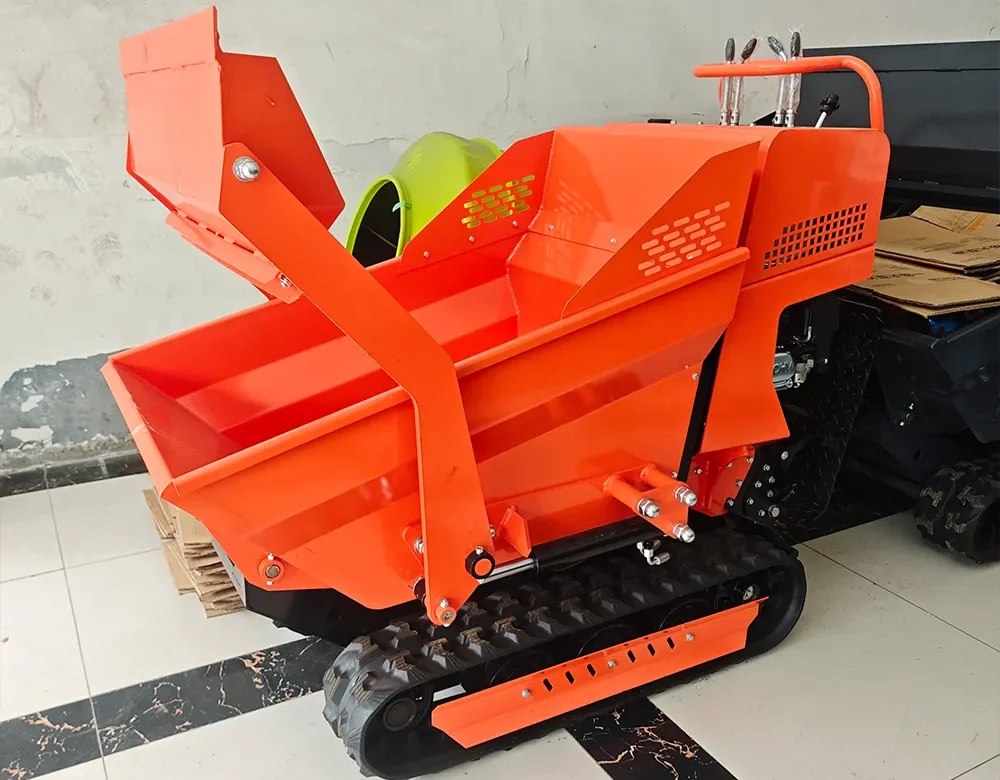
A compact crawler dump truck is most useful when material must move through hard-to-reach areas. CNFS Group specifically positions its machine for construction, agriculture, landscaping, and similar transport tasks. Its product page highlights use cases such as snow removal, agricultural transport, and rugged terrain work.
On a construction site, the machine works well beside a mini excavator or trenching crew, especially when hauling spoil, backfill, or broken tracked concrete and debris over a short distance. On a farm, the same unit can move feed, compost, or soil in wet conditions. In landscape work, it is useful for mulch, gravel, pavers, and loose materials where a larger truck cannot enter without damage.
This flexibility is why the category remains so strong. It supports applications such as construction, farm support, road repair, and estate maintenance. It is not a gimmick. It is a compact transport solution for real material handling, especially where access defines productivity.
CNFS Group is not presenting these units as consumer toys. Its site frames the business as a modern machinery manufacturer founded in 2015, integrating R&D, production, and sales. The company lists tracked dump trucks among its main product categories and says it can customize products according to customer demand. It also passed ISO9001 in 2021 and was recognized as a national high-tech enterprise in the same year.
That matters because B2B buyers do not just need a machine. They need stable manufacturing, quick answers, and support after shipment. CNFS highlights professional engineering, strict inspection, rich export experience, and around-the-clock after-sales service. It also provides direct contact channels, including phone, WhatsApp, and email, which is useful for dealers and project buyers who need fast technical clarification.
So if you are looking for a truck on the market that combines compact size, practical payload, export support, and factory-based response, this is the type of supplier profile worth paying attention to. For distributors, contractors, and equipment importers, that combination can help reduce operating costs over the life of the equipment.
A tracked dump truck is used to move loose materials such as soil, gravel, debris, and landscape fill on soft or uneven ground. Its track system helps it work in narrow, muddy, or sloped areas where wheeled carriers struggle.
For tight-access and short-haul work, yes, often it is. A compact unit is easier to place, easier to turn, and more practical near buildings, gates, and trench lines, while articulated dump trucks are better for large open-site haul work.
Not always. Many compact units use gasoline engines successfully. The better question is whether the powertrain offers dependable torque, parts support, and service convenience for your market and work cycle.
Choose a self-loading model when one operator must gather, haul, and dump material alone on a small site. If a separate loader or mini excavator is already available, a standard dumper may be more cost-effective.
Ask about dimensions, payload, tipping system, factory capacity, quality control, spare parts, export support, and after-sales response. CNFS publicly highlights design support, fast production, strict quality control, and 24-hour after-sales service.


 Turkish
  English
  German
  French
  Dutch
Dutch  Spanish
  Danish
  Norwegian
  Hungarian