Kerülje el a késedelmes válaszadást, kérjük, írja be WhatsApp/Skype-ját az üzenettel együtt, hogy az első alkalommal fel tudjuk venni Önnel a kapcsolatot.
We will reply you within 24 hours. If for urgent case, please add WhatsApp/WeChat: +8613791936882 ,. Or call +86-18678911083 directly.
When crews still move soil, gravel, and debris by hand, projects slow down, fatigue rises, and spills become common. On muddy or narrow access jobs, the problem gets worse. A compact tracked dumper solves that bottleneck by carrying more, tipping faster, and moving where wheeled tools often fail.
A mini crawler dump truck is a tracked dumper built to transport and unload material on mud, slopes, and tight work areas. The right model combines a stable crawler chassis, powered tipping, usable payload, and easy service access so contractors, farms, and landscape teams can move more with less manual handling.
A mini crawler dump truck is a small powered carrier with a skip or bucket, a low-profile chassis, and a track system instead of standard tires. CNFS Group describes its Dump Truck 500 as a machine for construction and agriculture, with a lift bed, rubber tracks, and a tight 1.15 m turning radius for confined work zones.
In simple terms, a mini dumper picks up loose material, moves it across rough ground, and unloads it with a power tip. That is why many buyers use a crawler dumper instead of a manual barrow when the job involves mud, debris, or repetitive short-distance transport. HSE defines manual handling as lifting, carrying, pushing, pulling, or moving a load by bodily force, and it tells employers to avoid hazardous manual handling where reasonably practicable.
For B2B buyers, the machine matters because it solves a very practical problem. Labor is expensive. Delays are expensive. Rework is expensive. When a dumper keeps materials flowing, it protects schedule, reduces physical strain, and supports a cleaner workflow from loading point to dumping point. That is the basic reason this category keeps growing in contractor, farm, and estate operations.

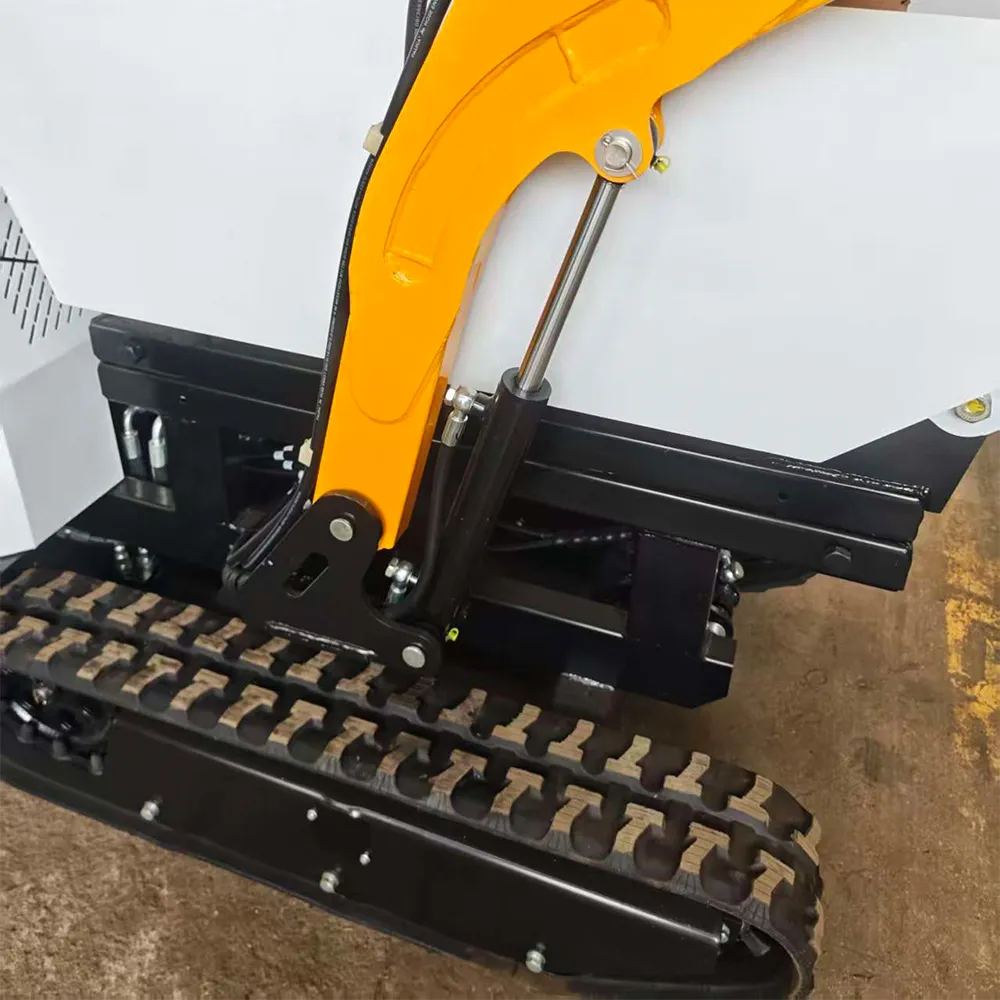
The biggest reason is ground contact. A track dumper spreads weight across a wider footprint than a wheel-based cart, which improves traction and stability on soft or uneven surfaces. CNFS Group’s product page highlights a 700 mm chassis width, 180 mm track width, 1000 mm grounding length, and climbing capacity up to 20°, all aimed at work on mud, slopes, and rough access paths.
That matters because real jobs are messy. A mini crawler can traverse wet soil, gravel, and narrow paths without fighting for grip every few meters. On sites where a four-wheel drive utility cart still leaves ruts or feels unstable on wet ground, a tracked machine often feels more secure and more predictable for the operator.
The practical benefit is not only movement. It is confidence. Crews can keep cycling loads instead of stopping to recover stuck equipment. That saves time, protects finished surfaces, and reduces the chance of spills on a slope or along an embankment. On mixed terrain, that difference can decide whether a small crew finishes in one shift or loses half a day to manual hauling.
A good hydraulic system does more than raise the bucket. It improves unloading speed, reduces operator strain, and makes cycle times more consistent. CNFS Group specifies a tipper with a 100° tipping angle and 46# anti-wear oil, which is a practical setup for repeated dumping on busy projects.
This is where a hydraulic mini dumper earns its keep. Instead of shoveling out half-stuck material, the operator tips, clears the load, and returns faster. OSHA notes that ergonomics helps lessen muscle fatigue, increase productivity, and reduce the number and severity of work-related musculoskeletal disorders, especially where workers lift heavy items or push and pull heavy loads.
For many buyers, this is the real ROI point. The machine does not just move the load. It reduces wasted motion. That helps simplify the full work cycle and support high efficiency on jobs where every extra handling step costs time. On smaller construction projects, a fast, repeatable tip can create more value than one extra trip per hour.

A tracked carrier in this class is useful in construction, farm, nursery, municipal, and landscape work. CNFS Group markets its unit for construction, agriculture, and landscaping projects, while its own buyer guide also points to soil, gravel, and concrete debris handling on building sites.
Typical B2B uses include:
Because the machine is designed to transport bulk material in a small size, it fits jobs with gates, alleys, side yards, and basement access. That is where it becomes ideal for construction teams doing urban infill, farm repair, property maintenance, and narrow-access service work. It is also a practical transporter for crews who need a powered carrier but do not want the weight, cost, or space demands of larger site equipment.
Not every site needs the same carrier. A manual wheelbarrow is cheap, but capacity is low and fatigue is high. An electric wheelbarrow is cleaner and quieter, but it usually offers less payload and less stability on aggressive slopes. A large mining dump truck belongs to a completely different class. A crawler mini dumper truck sits in the middle: small-footprint, powered, and built for tight, rough access.
If you often work on mud, service tracks, or extreme terrain, the almost tank-like footprint of a crawler unit is easier to trust than a narrow wheel setup. The tradeoff is lower travel speed on pavement. For most buyers, that is acceptable because the goal is efficient material transport, not road transport.
This comparison also explains why a tracked unit can outperform larger machines in tight jobs. A bigger loader may have more power, but if it cannot enter the work zone or turn cleanly, its extra capacity means very little. Fit matters. Cycle flow matters. Access often matters most.
When you review any dump truck for sale, start with the job, not the brochure. Ask what you move, how far you move it, how wet the ground gets, how steep the route is, and whether the machine must pass through gates or narrow service lanes. Those answers decide whether you need a standard carrier, a high-tip machine, or a dumper tracked unit with wider tracks.
I usually recommend this checklist:
CNFS Group says it has a professional design team, strict quality control, one-stop before-sales and after-sales service, fast delivery, and 24-hour after-sales response. For B2B buyers, those points are not marketing filler. They are purchase-risk controls. They affect uptime, parts supply, documentation, and how fast a problem gets solved after delivery.
A strong supplier should also be clear about production milestones. Buyers want to know when the quote will arrive, how production will be scheduled, when inspection happens, and what support looks like after shipment. That level of process discipline is often what separates a serious equipment partner from a basic reseller.
The cheapest dumper is not always the most profitable. If downtime is frequent, the machine hurts output more than it helps. That is why buyers should look for durable frames, stable tip components, easy-access service points, and engines with proven parts availability. Briggs & Stratton’s CR950 page highlights features such as a cast iron sleeve, mechanical governor, and maintenance-free ignition aimed at supporting power delivery and engine life.
In daily use, reliability comes from simple habits: correct oil, clean air filtration, track inspection, proper tension, and avoiding overload. CNFS Group publishes fuel, engine oil, and oil tank capacities on the product page, which helps buyers plan preventive maintenance and ensure stable operation from day one.
The ROI logic is simple. Good durability protects utilization. Utilization protects margin. For distributors, rental operators, and contractors, that is the chain that matters. A heavy-duty machine with clear service data and available parts normally creates a better long-term ownership result than a cheaper unit with unclear support.
Yes—especially for distributors, project buyers, and fleets. Factory-direct suppliers can often adjust body style, color, labels, shipping configuration, and sometimes guarding or skip options. CNFS Group says it has a professional design team, custom service, free plan quotes, mass-production capability, and fast production with on-time delivery. It also says it provides one-stop before-sales and after-sales service and 24-hour response.
For B2B customers, that matters because the machine is rarely a one-off purchase. You may need branding, manuals, parts kits, inspection records, or market-specific features. Good customization can enhance distributor value, while clear milestones for production, acceptance, delivery, and service reduce project risk.
This is where engineering depth becomes practical value. A supplier with real production experience can help match skip layout, guarding, tread needs, shipping method, and documentation to how your crews actually work. That kind of support is not flashy, but it is the sort of technological innovation buyers feel in everyday operations.

Most machines in this class are gas-powered, though some buyers also ask about diesel or electric options for specific rules or low-noise environments. CNFS Group’s current model uses a Briggs & Stratton petrol engine with 208 cc displacement, while the company’s buyer guide also notes that petrol remains common and electric versions are usually chosen for low-noise applications.
For future planning, think beyond the first purchase. Will you later add more units? Will the machine work beside a loader, mower fleet, or support tools such as a brush mower? Do you need distributor-ready manuals and parts kits? A supplier that already works with export buyers, stock planning, and after-sales support is better positioned to scale with you. CNFS Group presents itself as a manufacturer with export experience, engineering support, and product categories spanning construction machinery, farm machinery, garden carts, and metal customization.
Buyers should also pay attention to operator feel. Comfort and control support safety, especially on slopes and repetitive cycles. The best mini dumper should deliver optimal performance in real site conditions, not just on a showroom floor. That is what protects uptime, operator acceptance, and long-term fleet efficiency.
The main benefit is safe, powered movement of heavy loads across mud, soft ground, and confined work areas. Compared with manual handling, it cuts fatigue and improves repeatable cycle efficiency.
Usually yes. Tracks improve footprint, grip, and stability on wet or loose ground. That is why tracked units are commonly chosen for muddy access, soft soil, and mixed terrain.
Choose based on material type, route length, and unloading frequency. A 400 kg class unit can be enough for lighter work, while 500 kg often gives better output for contractors, farms, and maintenance crews.
Ask for spare parts availability, service documents, operator training, response time, production milestones, and warranty details. CNFS Group publicly highlights one-stop before-sales and after-sales service plus 24-hour response.
Yes, if the size, payload, and tipping system match both applications. Tracked dumpers are commonly used in construction, farms, nurseries, and landscape maintenance because they combine access, grip, and simple unloading.


 Hungarian
  English
  German
  French
  Dutch
Dutch  Spanish
  Danish
  Norwegian
  Turkish