Kerülje el a késedelmes válaszadást, kérjük, írja be WhatsApp/Skype-ját az üzenettel együtt, hogy az első alkalommal fel tudjuk venni Önnel a kapcsolatot.
We will reply you within 24 hours. If for urgent case, please add WhatsApp/WeChat: +8613791936882 ,. Or call +86-18678911083 directly.
Running a busy flower business is hard when plants are hard to move, displays take too long to reset, and damaged products eat your margin. The fix is simple: use a durable flower trolley system that improves transport, storage, display, and daily handling from greenhouse to sales floor.
Virágkocsik are mobile shelving carts used to move, store, and display flowers and plants in greenhouses, nurseries, auctions, warehouses, and retail spaces. A good flower trolley or danish trolley uses sturdy shelves, smooth wheels, and modular design to support safer handling, faster transport, cleaner display, and better space use.
A flower trolley is a mobile handling system designed to move and present flowers and plants in a safe, organized, and efficient way. In simple terms, it is a wheeled rack or cart with a frame and one or more levels for carrying trays, buckets, potted products, or cut flowers. It is used across the garden, retail, and wholesale chain because it saves time and reduces handling damage.
In everyday use, a trolley helps workers move more products in one trip. That sounds basic, but the effect is huge. When a team stops carrying items by hand and starts using a mobile rack, the workflow becomes more consistent. A well-built flower cart protects stems, leaves, and pots while keeping items easier to count, sort, and load. That is why this equipment is common in the nursery, greenhouse, warehouse, and retail store.
In the horticultural sector, handling speed matters. Fresh products do not wait. Displays change fast. Orders must move quickly. A virág kocsi gives the user a practical tool for transport, temporary storage, and attractive display without switching equipment between each stage.
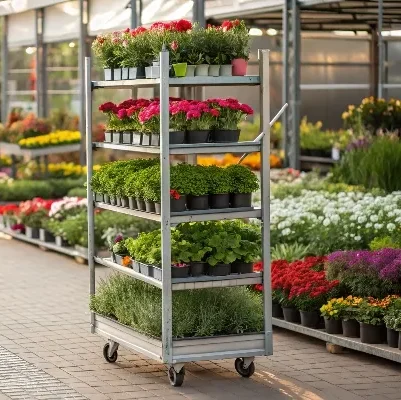
The shelf system is where real efficiency begins. If the levels are too low, flowers get crushed. If they are too high, vertical space is wasted. If the layout is fixed, the trolley becomes less useful over time. That is why an adjustable shelf structure matters so much.
A trolley with adjustable levels supports many product types. One day it may carry potted plants. The next day it may handle bouquets or trays of seasonal color. A better shelf layout also makes display easier. Products can be placed at visible heights, which improves the look of the display flower trolley while keeping staff restocking fast and easy.
For buyers focused on output and handling cost, shelf design affects labor. A clean layout reduces picking time. It also helps product protection. In wholesale and auction environments, this is especially important because quick and easy handling lowers loss rates. A good shelf structure turns one virág kocsi into a versatile work tool.
Some buyers choose plywood levels for smooth support. Others prefer wire mesh for airflow and drainage. The right choice depends on use.
A trolley is only as good as its movement. If the wheel system is weak, the cart becomes noisy, unstable, or hard to steer. In busy retail and nursery spaces, that slows everything down. Good mobility starts with the right caster setup and the right frame balance.
The best designs usually use a mix of fixed and swivel wheels. This helps the trolley move in narrow aisles, turn around endcaps, and roll in loading areas without tipping. A smooth wheel system also protects products. Jumpy movement damages stems and shifts pots. For a flower display cart, smooth mobility is part of product care.
In professional settings, wheel choice should match the floor and the load. A lightweight display use in an indoor florist is different from a wet greenhouse or a rough loading zone. That is why serious buyers ask detailed questions about axle design, bearing quality, and caster material before they order.
A solid wheel system turns a basic cart into a truly trolley durable solution.
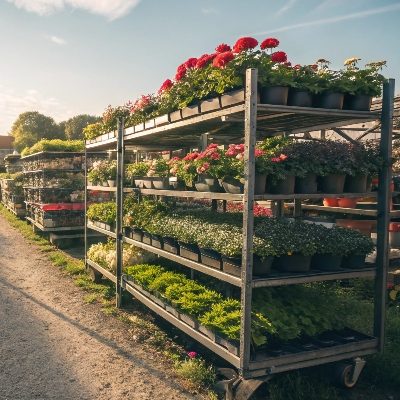
In a greenhouse, speed matters. Staff move stock constantly for spacing, watering, staging, and shipping. A flower trolley reduces hand carrying and keeps items more organized from row to row. That means better output, less fatigue, and faster resets during seasonal peaks.
In a nursery, product handling is more complex because stock can include trays, pots, mixed assortments, and promotional displays. A nursery trolley makes that easier by giving one rolling platform for many product types. It also supports cleaner nursery transport from growing area to truck or sales zone. This is where the line between handling and merchandising becomes very useful.
At a garden center, display matters just as much as movement. A trolley can act like a moving display stand, allowing teams to restock fast without rebuilding a whole section. For wholesale buyers, this makes the same equipment valuable at more than one stage: production, shipping, retail, and seasonal reset.
This is why plant trolleys and flower handling carts are standard tools in the horticultural world.
Yes. That is one of the biggest reasons professional buyers choose trolley systems over basic shelves or manual carrying. A single flower trolley can support display, short-term storage, internal transport, and external logistics planning. That kind of multi-use equipment helps control cost.
For example, a grower can use a trolley for staging in the greenhouse, loading into a truck, temporary warehouse holding, and then retail floor presentation. Fewer product touches mean less damage. Fewer equipment changes mean faster work. That is a good example of how a multi-function handling system improves operational flow.
This same thinking applies in factory projects, too. At FangSheng, our customers in plastics and packaging often ask for turnkey efficiency, fewer handling steps, clear milestones, and stable output. The same decision logic works here. A flower cart that handles more than one task delivers better total value than a low-cost unit that solves only one problem.
A well-planned roll container style solution may also support cross-docking and back-room storage in retail distribution.
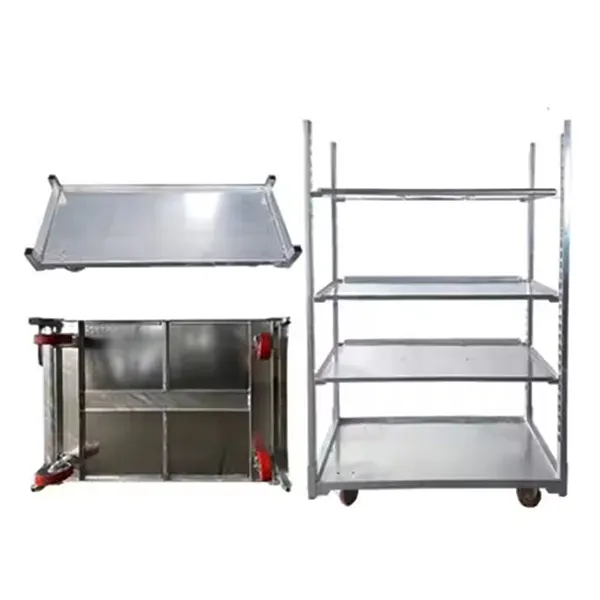
No two customers run the same workflow. That is why many buyers ask to customize their trolley system. Some need more shelves. Some need a lower cart height. Some need wider spacing for larger plants. Others want branding or packaging for local distribution. A customizable setup supports those differences.
For indoor and outdoor use, finish choice is important. Outdoor units may need stronger corrosion protection, while indoor retail units may need cleaner visual details. Some buyers ask for a tray format instead of open shelves. Others want a combined plant stand and display style for mixed merchandising. In some cases, a garden cart or plant caddy with wheels may be added to the total handling system for smaller decorative products.
Factory-direct support helps here. Instead of buying a fixed catalog item only, B2B users can discuss load, size, application, and expected lifecycle. That is a better fit for buyers who think in milestones, output targets, and future expansion.
This kind of flexibility supports both wholesale buyers and regional distributors.
A trolley may look simple, but long-term value comes from support. Wheels wear. Shelves may need replacement. Volume may increase. Product mix may change. That is why after-sales and scalability matter.
Global B2B customers often plan years ahead. They do not want a supplier that disappears after shipping. They want continuity: spare parts, remote support, replacement options, and the ability to expand as their business grows. This is especially true for distributors and project managers who build full operating systems for end-user factories or commercial plant businesses.
At FangSheng, that long-view mindset is central. We believe factory-direct supply should include the full lifecycle: engineering discussion, production, export support, delivery follow-up, and service after the order. In real terms, that means reliability. It means the trolley you buy today should still fit your process tomorrow.
That is what serious buyers want: a high-quality solution that stays useful, scales with demand, and protects daily operations.
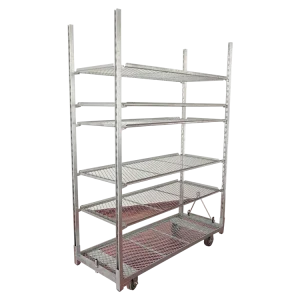
The main benefit is easier movement of flowers and plants with less damage, faster handling, and better display flexibility.
A danish trolley is usually more modular and better for professional use because it supports removable shelves, easier transport, and stronger reuse across wholesale and retail settings.
Yes. Many designs work for indoor outdoor applications, but finish, wheel type, and shelf material should match the actual environment.
Plywood gives smoother support, while wire mesh supports drainage and airflow. The better choice depends on the product and use environment.
Ask about load rating, wheel quality, coating, shelf options, lead time, spare parts, packaging, and after-sales support.
Yes. They are widely used in auction, wholesale, greenhouse, and retail environments because they support quick and easy movement and better display flow.


 Hungarian
  English
  German
  French
  Dutch
Dutch  Spanish
  Danish
  Norwegian
  Turkish