Évitez que votre demande ne tarde à répondre, veuillez saisir votre WhatsApp/Skype avec le message, afin que nous puissions vous contacter dans les plus brefs délais.
We will reply you within 24 hours. If for urgent case, please add WhatsApp/WeChat: +8613791936882 ,. Or call +86-18678911083 directly.
A beautiful flower cart can attract customers, but a weak cart creates hidden costs. It may rust, shake, bend, or delay daily work. For flower retailers, greenhouses, nurseries, and garden centers, the better solution is a durable, custom-made cart built for display, transport, and long service life.
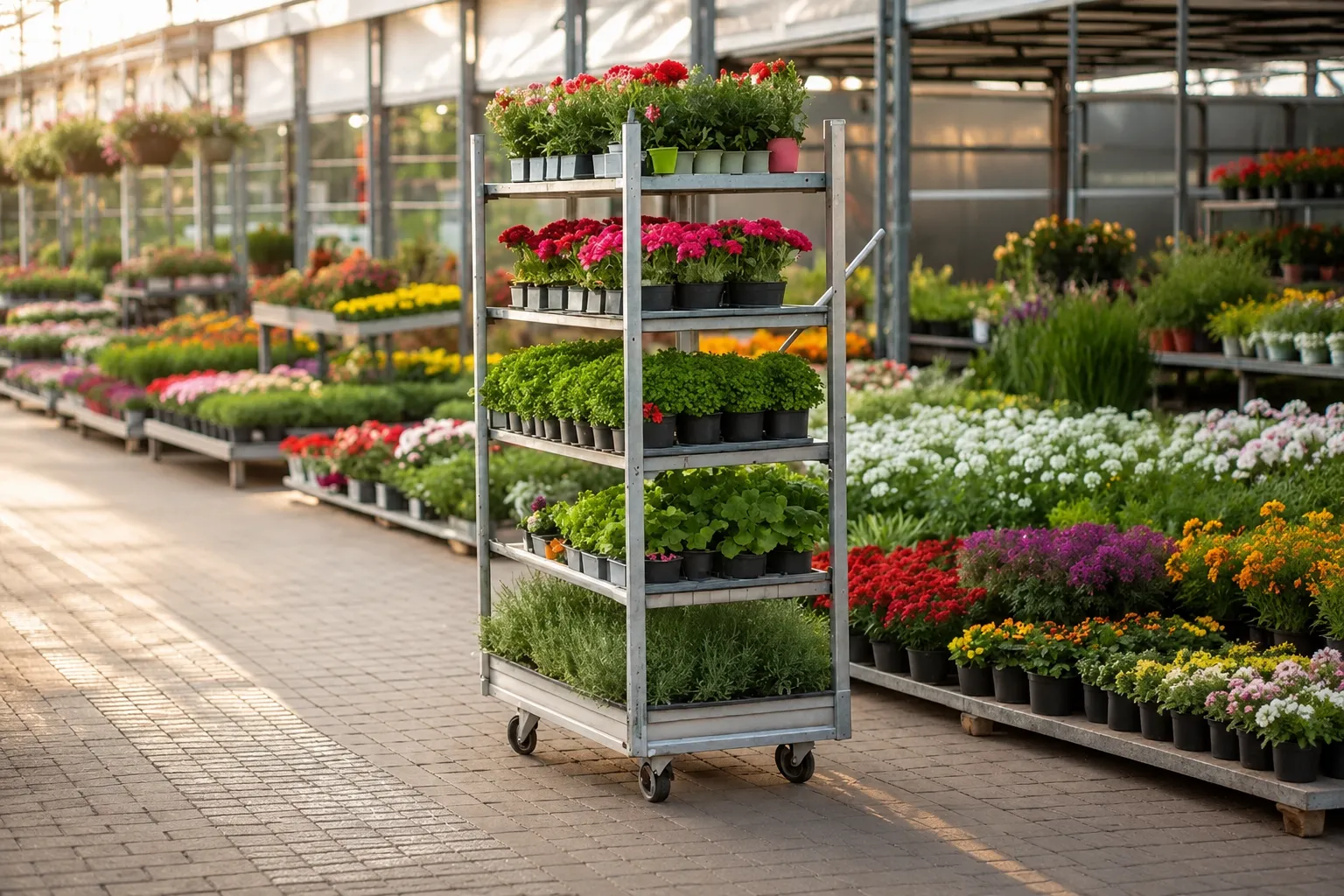
UN chariot à fleurs is a mobile display and handling cart used by a flower shop, garden center, greenhouse, nursery, market, warehouse, wedding supplier, and landscaping business. The best flower carts combine strong structure, smooth wheels, adjustable shelves, corrosion-resistant finishing, and custom branding, helping buyers improve display, movement, labor efficiency, and total cost control.
For home users, a flower cart may only be a piece of decor. For business buyers, it is different. A cart supports daily product movement, store display, plant protection, order sorting, warehouse turnover, and seasonal sales. When it fails, the buyer pays more than the repair cost.
Greenhouse growers, nursery operators, gardening retail chains, logistics warehouses, farms, fruit and vegetable planting bases, municipal greening teams, and landscape contractors all need carts that can handle repeat use. They care about reliability, delivery stability, service life, regulatory compliance, and integrated cost control.
That is why a B2B buyer should not only ask, “Does it look nice?” A better question is: Can this cart keep working every day, across stores, warehouses, nurseries, and transport areas? If the answer is yes, the cart becomes a real business asset.
A flower shop needs more than a pretty corner. It needs smart product flow. A mobile cart helps staff move flowers from storage to the sales area, build seasonal displays, group gift products, and refresh the store layout quickly. This makes the shop feel active and fresh.
For retail display, a flower cart can show fresh flowers, potted plants, gifts, bouquet sets, vases, ribbons, cards, and small gardening products. A front-facing display can catch attention near the entrance, checkout area, or sidewalk. It also works well as a small flower bar or bloom bar for customers who want to choose stems by themselves.
Many online searches for chariots à fleurs ideas focus on visual style. That is useful, but B2B buyers need to go further. A garden center chain needs standard size, stable supply, strong load capacity, easy assembly, and repeatable quality across many locations.
A useful market cart can support seasonal plants in spring, patio flowers in summer, pumpkins and mums in autumn, and holiday greenery in winter. It can also be used as a plant stand, pot stand, or temporary promotion island. With the right frame, the same cart supports many selling seasons.
Good ideas about flower display include:
For garden center chains, the most valuable cart is not the fanciest one. It is the cart that can be used again and again, in many stores, with stable supply and low maintenance.
The details decide service life. A cart may look simple, but its performance depends on frame structure, wheel material, welding quality, shelf design, surface treatment, and load balance. If one part is weak, daily use becomes harder.
A good cart with wheels should move smoothly on store floors, greenhouse paths, warehouse floors, and loading areas. Some buyers need quiet wheels for retail spaces. Some need stronger wheels for rough floors. Some need brake wheels for safety. Many commercial carts use 4 wheels to improve movement and stability.
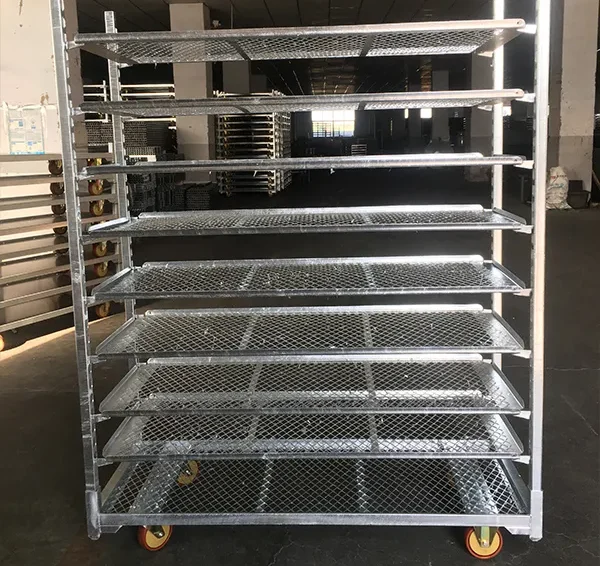
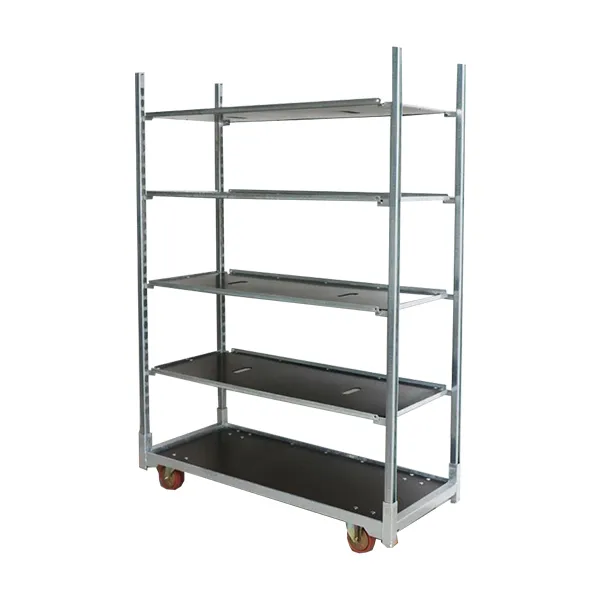
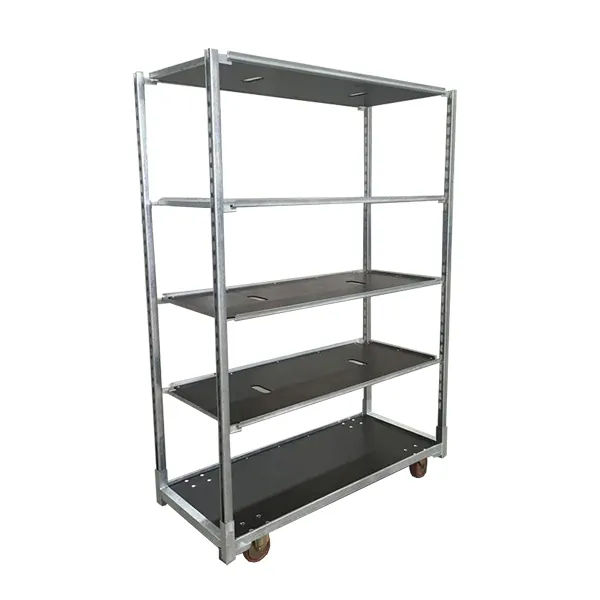
The shelf design is just as important. An adjustable shelf system helps buyers place tall plants, small pots, trays, bucket flowers, gift packs, and mixed products. A multi-tier cart improves product visibility while saving floor space. For larger operations, a stable rack structure can support warehouse sorting and plant transport.
A wooden chariot à fleurs is popular for floral styling, boutique shops, and event scenes. It gives a warm, rustic, farmhouse, or amish look. It can fit a living room, pop-up shop, cafe corner, or soft retail display. For light home decor, this style can be attractive.
However, for commercial use, a metal flower stand or steel trolley is often better. Metal carts handle moisture, weight, cleaning, and repeated movement more reliably. A galvanized or powder-coated structure can offer stronger corrosion resistance, especially for greenhouse and garden center use.
A Danish-style trolley is especially practical for B2B buyers. It can combine transport, storage, and display. It usually supports adjustable shelves, compact loading, easy assembly, and repeated use. For buyers who need durability, supply stability, and long-term cost control, a Danish trolley solution is often more useful than a purely decorative cart.
Greenhouses and nurseries do not use carts only for decoration. They use them to move plants, sort orders, reduce walking time, and protect products. A reliable flower cart can move seedlings, potted plants, trays, hanging baskets, and finished retail products from production areas to shipping zones.
For nursery operators, a flower display stand with wheels can also support temporary retail areas. Plants can move from growing areas to customer-facing zones without repeated hand loading. This reduces labor and lowers damage risk.
For farms and fruit and vegetable planting bases, carts can support picking, sorting, seedling movement, and short-distance transport. A related wagon cart, wheelbarrow, or utility trolley may help with lighter outdoor work, while stronger metal carts support heavier repeated tasks.
Typical operation benefits include:
Yes. A chariot à fleurs can also serve the event market. Wedding planners, rental companies, hotels, and florists often use carts for wedding flower displays, garden wedding scenes, bridal shower setups, and party decor. A cart can become a photo station, a bouquet bar, a welcome table, or a stand for wedding party.
Decorative details make the cart more attractive. A canopy, small umbrella, soft fabric, vine, silk flowers, white flowers, greenery, and a custom sign can create a strong visual effect. Some event users also connect a cart with a candy cart, dessert station, or photo backdrop.
But even for events, strength matters. Guests may touch the cart. Staff may move it across grass, tile, carpet, or outdoor paths. A weak diy prop may not be safe for repeated rental use. A better choice is to buy a strong base cart, then finish the cart diy styling with local decorations.
This is a smart model for event companies: buy durable carts once, change the decorative theme many times.
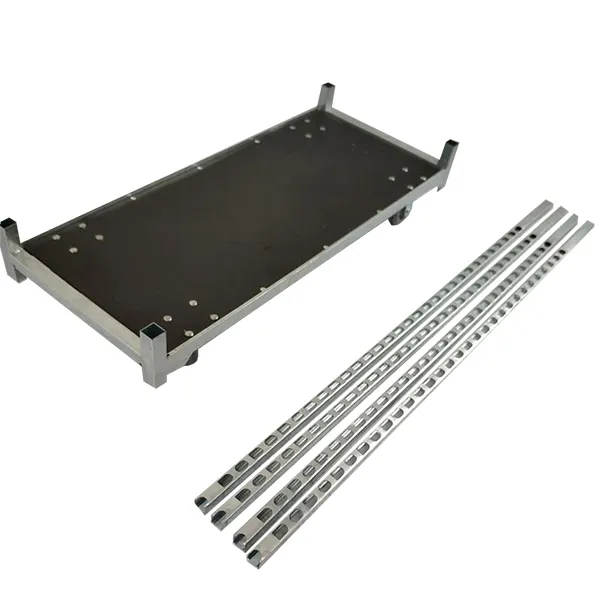
B2B buyers rarely need one standard cart forever. Different businesses need different sizes, colors, wheels, shelves, and packaging. A good manufacturer should support custom compatibility for different products, markets, and selling channels.
Common custom options include:
For a small florist, the priority may be visual display. For a garden center chain, it may be standardization. For a logistics warehouse, it may be loading efficiency. For municipal greening, it may be outdoor durability. For farms, it may be simple use and easy cleaning.
This is why custom manufacturing matters. A cart should match the buyer’s real workflow, not force the buyer to change the workflow for the cart.
Low unit price can look attractive, but total cost tells the real story. A poor cart may create repair cost, product damage, staff complaints, store downtime, and replacement orders. A strong cart with stable quality usually costs less over its full service life.
A reliable manufacturer helps reduce total cost in several ways. First, consistent production keeps size, welding, surface treatment, and packaging stable. Second, custom design reduces mismatch. Third, stable supply helps buyers plan seasonal sales. Fourth, quality control lowers the risk of complaints.
For distributors, chain stores, and project buyers, this matters a lot. A late shipment can miss the selling season. A weak cart can damage the buyer’s brand. A poor package can cause freight claims. Reliable manufacturing protects the whole purchasing plan.
Fangsheng positions itself as a manufacturer of Danish trolleys, flower trolleys, garden carts, and metal racks. For buyers who need factory-direct supply, OEM/ODM customization, and export-ready solutions, the key value is not only the product. It is the ability to support repeated orders with stable quality.
Before a bulk order, buyers should test the cart against real use conditions. Do not only look at catalog photos. Check the cart in your store, greenhouse, warehouse, or project site. Load real products on it. Move it across your real floor. See how workers use it.
Important checks include:
For a retailer, a chariot à fleurs for indoor use may need smooth movement and clean appearance. For an outdoor garden area, anti-rust finish and wheel strength matter more. For a logistics warehouse, loading efficiency and spare parts matter most. For a garden center, indoor outdoor flexibility is key.
If you buy for multiple locations, create a sample approval process. Test one or two units first. Confirm size, shelf design, finish, packaging, and load. Then scale to bulk orders.
The best flower cart for a flower shop should look attractive, move smoothly, and carry daily products safely. It should support flowers, bouquets, potted plants, gifts, and seasonal displays. For commercial use, a metal or Danish-style trolley is often more durable than a light decorative cart.
Yes. For outdoor use, buyers should choose corrosion-resistant materials, strong wheels, and stable structure. Galvanized steel or powder-coated metal is often better than untreated wood for long-term outdoor use.
A DIY flower cart can work for light decor, photography, or one-time events. For daily business use, a manufacturer-built cart is safer and more reliable. Many buyers use a strong factory-made cart and then add local diy decorations.
A flower cart often focuses on display and retail appearance. A Danish trolley focuses more on professional plant transport, storage, and adjustable shelf use. For B2B buyers, Danish-style trolleys can serve as durable flower carts for nurseries, greenhouses, and garden centers.
Yes. A professional manufacturer can usually customize size, color, shelf layout, wheel type, brake options, logo, packaging, and surface finish. Customization is important for chain stores, distributors, nurseries, greenhouses, and project buyers.
Bulk buyers should compare total cost, not only unit price. Check product life, load capacity, packaging, spare parts, lead time, and after-sales service. A durable cart with stable supply can reduce replacement cost, labor waste, and product damage.


 French
  English
  German
  Dutch
Dutch  Spanish
  Danish
  Norwegian
  Hungarian
  Turkish